






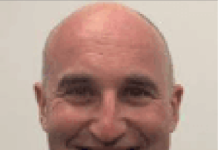


INTERVIEW WITH VALENTIN D. IVANOV– CRISTIAN TAMAȘ

CRISTIAN TAMAȘ: As someone working at the European Southern Observatory, you operate in one of the most international scientific environments in Europe. Why do you think European science fiction — unlike European science — remains so fragmented along national lines?
Valentin D. Ivanov: A great aspects of working at the large international institution is that one does not feel like a foreigner. We are all foreigners here. This is a striking contrast with most universities or other research institutions.
The European speculative fiction environment also has its international moments – the annual Eurocons, for example.
However, we are divided by innumerable language barriers and building translation bridges between any two languages with small reader bases is a challenge, because the additional translation costs make publishing foreign works difficult to pay off.
Curiously, in Bulgaria we tried to internationalize our national convention Bulgacon. Since the 2022 we have had a strong international participation – first with online events, and then actually bringing people here. A little name-dropping: Peter Watts, Paul McAuley, Lavie Tidhar were among the participants over the years. As organizers we took advantage of the fact, that the young generation is essentially bilingual, speaking English at least at a conversational level. I am quick to notice that this is not the same as speaking English at publication level: with a very few exceptions – Elena Pavlova is one of them – our writers still need translators.
CRISTIAN TAMAȘ: From your perspective as both a scientist and a SF fan, does European SF suffer from a lack of cross-border circulation of ideas, themes, and authors? What prevents European SF from achieving the same level of continental cohesion that European science enjoys?
Valentin D. Ivanov: I think the fragmentation of the fandom by language and the small reader base of individual language are the reasons we see in our bookstore so few books by authors from even the closest neighboring countries.
In a sharp contrast, the scientific collaboration is truly international, even oceans and continents can not separate us.
First, in science we have the Latin of today – the English language, of course.
For a number of reasons, English has not become a true Latin if speculative (and mainstream) fiction: writing fiction requires a much higher language proficiency, something that is not necessary to read and write “dry” scientific texts and in some countries there is a resistance against English for political and historical reasons.
A second issue is that in science we have tools and standards that facilitate collaborative work.
LaTeX and Overleaf are examples when it comes to the actual writing of papers. LaTeX is portable, the style files that publishers provide make producing and submitting the manuscripts a breeze.
Overleaf is a cloud-based multi-user platform for writing and editing manuscripts.
Github is a similar tool for developing and publishing code. On the top of that one can add the long list of audio and video-conferencing tools.
The speculative fiction fandom is different – the personal contacts are of the foremost importance. The conferencing tools help once these contact are established, but are of little help to lay their foundations. The speculative writing is rarely collaborative – the vast majority of books are single-authored.
Unfortunately, while science and science fiction have a lot in common, they also have some important differences and I am afraid that handling long-distance collaboration is one of them.
CRISTIAN TAMAȘ: Is the “illusion of unity” in European SF a cultural problem, an organizational problem, or simply a matter of unequal resources among national fandoms?
Valentin D. Ivanov: Yes.
This short answer is not entirely a joke because I can see all three issues deepening the dividing lines.
Let’s turn back to science once more.
There were two big European scientific collaborations from the mid-XX century that we can look for guidance from.
One was the establishing of CERN – the European Nuclear Research Center near Geneva and the other was the establishing of the European Southern Observatory.
They both happened barely within two decades from a devastating war that shattered the European economy and left the continent in rubble.
Some wise people – nuclear physicists and astronomers realized that counties needed to collaborate – both to help heal the past conflict, and to allow European scientists “to compete on equal footing with their American colleagues”.
This citation is my own and rather liberal translation from the 1955 SF novel „Les Robinsons du Cosmos” by the french writer Francis Carsac.
A more cynical observer would probably conclude that the true unity will be reached only under pressure from an external “enemy” or competition. I prefer to venture a guess that it will come when the problem of scale that hinders the individual European countries, even the bigger ones, becomes tangible enough.
CRISTIAN TAMAȘ: What concrete steps could be taken to improve cultural exchange across Europe — for example, through transnational SF projects, joint anthologies, shared workshops, or cross-border residencies?
Valentin D. Ivanov: Yes to all. However, I would like that however, important, those are the technical aspect of the collaboration. I think the core of the improvement is the growth of people: writers writing better, widening their culture and deepening their research; fans, knowing more, having access to a wider variety of books and accessing more diverse cultures.
We suddenly are back to the roles of the family and the education.
The resigning parents and the degrading education in the last years have had a devastating effect on the personal growth of people.
Even though I have been living abroad for three decades, I have followed closely the developments in my country and the decline has been apparent and sad.
Unfortunately, this seems to be a common process today, even in richer countries the good taste and the tendency to disregard facts and rely on opinions have taken hold…
This is very sad and troublesome, because to exchange culture, one has to have some on his or her own and has to be able to appreciate the culture of others.
Let’s finish on optimistic note, and hope that the speculative genre as the most forward looking and progressive literary branch and its fans will see though this trend and fight it…
CRISTIAN TAMAȘ: How can Europe address the major imbalance between the large Western publishing markets — the British, German-speaking, French-speaking, Italian, and Spanish spheres — and the smaller Central, Eastern, and Northern European markets?
Valentin D. Ivanov: I think the main dividing line lies between the Anglosphere and everybody else.
The smaller dividing lines follow, setting apart the European countries. The integration of Eastern Europe happened in the midst of already declining sales and print runs made this task even more challenging.
The issue is not limited to Eastern Europe, my friends among the German and Spanish fandom also report that the book markets are shrinking.
There are many reasons – from the competition of social networks and visual arts, the the most recent adversary – the artificial intelligence that undermined the human writing and put a question mark lingering over every text – was it generated by a living soul or by a soulless machine.
Not surprisingly, the impossibility to maintain a self-sustaining writing career diverted many talented people away from the speculative writing, so some complaints about the declining writing quality may be reasonable.
This intro is necessary before giving my answer and I am sure it will be disappointing to many – learn well English write directly in English.
Given that the young generations in all European countries are essentially bilingual and speak English reasonably well, alongside their native languages, this will open to you the entire European market, albeit not in German, or French or Spanish.
Yes, this will come with some loss of diversity and national identity, but it will save you the prohibitive translation costs.
Bulgarian writers, even the most successful, are doomed to print runs form a few hundred to a few thousand level.
Publishers do not like to disclose those numbers, but can get an approximate idea of the print run ratios counting the ratings and reviews in platforms such as Goodreads or the electronic bookshops.
Alas, the translated speculative books start with out level and exceed it by one or two orders of a magnitude.
We have a few example in Bulgaria, writers who follows this path: Elena Pavlova and Haralambi Markov. Between the two of them, they have published stories in few of the preemptive magazines, including Asimov, Tor, Uncanny, Future SF Digest, etc.
CRISTIAN TAMAȘ: Do you think “European speculative fiction” can be promoted globally as a unified cultural concept, or is international visibility achievable only through national branding?
Valentin D. Ivanov: We can certainly try! This is another way to put forward the question if the national or the global dominates the speculative genre. It is clear that some balance must be found between these two opposites, otherwise a work risks either to be too difficult to understand or to be boringly familiar.
To great extent this has been tried before, and the speculative authors from Europe that have gained the widest world-wide fame come from UK: Herbert Wells, Iain M. Banks, Douglas Adams, Ken MacLeod… The language problem is not their problem.
On the other hand, there is Bernard Werber, even though he is not directly associated with the genre and is better known as a mainstream author.
More recently, Francesco Verso, a writer and promoter from Italy is making consistent efforts towards putting together European SFF anthologies. This was recognized by the community with the Eurocon award in the promoter category that he won in 2025 but the books he publishes are hardly known outside the old continent. At least, they give us a chance to read authors from our neighboring countries.
A major question here is how the European SFF is different from the world SFF.
I doubt there is a single answer, it is probably different for every country.
I can say that the main distinction of the Bulgarian SFF is the close connection with our history and folklore and I can speculate, that this is true for every one of the small countries with unique languages.
Is this different enough and interesting enough to a general reader from, say Idaho or California?
The sales suggest that Bulgarian SFF has not become a hit for those readers. I may look like a grumpy old man, but I will admit that they wider market probably is largely indifferent to us, because the vast majority of people like to read books and watch movies about themselves.
A glimmer of hope is the recent interest in the USA towards Afrofuturism and African futurism, and the somewhat older interest towards the Japanese manga and anime.
The lessen I take from these examples is that we need to find some unique angle or genre, instead of competing for the attention in the already popular genres and themes.
Do you believe the ESFS (European Science Fiction Society) Awards still reflect the true diversity of European speculative fiction, or have they become structurally biased toward countries with more active fandom organizations rather than stronger literary output?
Valentin D. Ivanov: Oh, a dangerously loaded question! We have a proverb in Bulgaria: God takes care of His Flock, but would not heard the goats back to the pen (the translation is mine). The Society provides excellent pan-European scene, but would not come to organize ourselves to climb on it. If we don;t have the people, the ideas, and the knowledge, we will miss out. Of course, the countries with lively fandom will benefit more and vice versa. But the good thing is that nobody stops anybody from participation. A year ago Bulgarians earned four (4!) Eurocon awards. This year we had only one, but this is because of the strong competition. Furthermore, a person from my minuscule country – Joro Penchev – is in the board of the organization. This is solely because of his personal engagement. Bulgarians regularly sit on panels and give presentations at the Eurocon. This year I organized a micro-fiction contest at the event. Having ideas, having what to say and having the time, the persistence and the will to follow through is the key, I think. Finally, these little breaks are usually a result of collective fan efforts – to underscore once more the importance of the communal approach.
CRISTIAN TAMAȘ: Only sixteen countries submitted nominations for the 2026 ESFS Awards. Why do you think nations with strong SF traditions — such as Sweden, Denmark, Norway, the Baltic states, Belgium, the Netherlands, Spain, Croatia, Slovakia, and Hungary — were absent?
Valentin D. Ivanov: I can only guess, but based on the experience from my country, I can come up with two possible explanations.
The first is the saddest – it is the lack or dissolution of the national speculative fiction organizations.
I have seen that it takes a dedicated team and a lot of time, expertise and patience to organize the nominations and the voting process.
My second hypothesis may be even sadder – the European speculative market is so small and fragmented, that it is not worth the effort to try promoting the national speculative fiction of these countries.
For the sake of the writers and fans I hope to be wrong on both acounts.
CRISTIAN TAMAȘ: What reforms or selection criteria could help ensure that ESFS (European Science Fiction Society) nominations are based on literary merit rather than internal favoritism or fandom politics?
Valentin D. Ivanov: The nominations are country-based and all the problem originate there: who is nominating, how the nominations are selected. Once they arrive to the ESFS, it is too late the fix anything. I can not give suggestions – the problems are specific for every country, but I can tell you how they are selected in Bulgaria where I have a first hand experience. They ere selected as a result of a popular vote – no one person or a group chooses them. Everybody can propose candidates and vote to select the national nominations. This is a democratic system and it comes with all the pitfalls of democracy, especially the one that the popularity can matter more than substance. We have had years when people who have many followers on the social networks have won a ridiculous number of nominations, even in categories where the had no achievements. Of course, they won nothing, because the community would not let them lie in the descriptions that were submitted to ESFS and it was obvious that they are random passers-by in the speculative arts. In effect, those were lost years, because the nomination went to wrong people, who had no chance to win awards, and people who truly deserved, could not be nominated. Regardless, the democracy is democracy and the attempts to fix it are more dangerous than those mistakes, so Bulgaria presented the nominations as they were voted.
I can think of one thing that the ESFS can possibly do, and this is to insist on a similar democratic process in the selection of nominations. ESFS has no police department to enforce the procedure, but at least can check the presence of a website and request the presence of a website and the submission of lists with votes.
This is a dangerous path, though, because it will imply explicit lack of trust in the community and can set a bad precedent. So, I would stick to recommendations.
CRISTIAN TAMAȘ: What mechanisms could ensure a more rigorous, quality based selection of ESFS Award nominations, reducing favoritism, clientelism, or purely organizational influence — and what kind of judging system would be most appropriate? For example, should the ESFS adopt a transparent, multi stage jury process, a rotating panel of independent experts, cross border evaluation committees, or a hybrid model combining fan input with professional assessment?
Valentin D. Ivanov: Similar systems work for some major literary awards, so, sure they can be an improvement. But here we will face the same problem we discussed before – the language barrier. The vast majority of written words are not and will probably never be translated into foreign languages. I doubt very much that somebody will be able to afford commissioning translations just for earning a nomination, not to mention that the advertisement power of the ESFS awards is dismal, even within the fans.
There is another problem, unfortunately. I just recently sat in a jury for a story contest, a part of the annual Bulgarian national convention Bulgacon. We had more than 120 contestants, typically of 2000-3000 words. This is equivalent to a more than 1000 page book, for the small Bulgaria. And this is just the stories.
Between these two issues I do not see a way to escape some multi-stage process with the first stages happening in individual countries, exactly where the favoritism and other issues arise.
CRISTIAN TAMAȘ: Would a pan-European platform dedicated to promoting all European speculative fiction — regardless of language or market size — be useful. If so, how should it be built, and who should be involved?
Valentin D. Ivanov: I see two paths here and the dedicated platform is certainly one. Another path is to take advantage of the existing platforms for books and arts, like Goodreads. Both options have advantages and disadvantages, with probably means that both should be pursued, to “cover all corners”. A dedicated platform is in danger of locking itself inside the speculative genre ghetto – I have seen this with the web sites of clubs and with the dedicated Bulgarian speculative wiki. Genre outsiders seldom visited them and almost never contribute. On the other hand, these are excellent resources of in-depth information that can not be found anywhere. The general resources are not perfect either – the speculative there remains invisible among the vast sea of mainstream art. However, there is a chance that some outsiders can stumble upon the information about our favorite genre and read or even bye a Bulgarian SFF book.
In both cases, we have the issue who would do it and this is the more serious problem. The Bulgarian publishers have resigned from active marketing efforts and seldom would organize authors’ events. Sadly, the promotion remains with the authors (I will point at John Scalzi as a good example of successful promotional activity). Regardless whether they like it, it is yet another burden on them that competes with the quality writing time.
CRISTIAN TAMAȘ: Thank you very much, Valentin!
Valentin D. Ivanov: It was a pleasure!
Astronomer Valentin D. Ivanov is recognized both as a major figure in Bulgarian science fiction and as an active personality within the European SF community.
His career and work seamlessly bridge the gap between high-level scientific research and speculative fiction.
Born in Burgas, Bulgaria (1967), Valentin D. Ivanov started writing science fiction and fantasy during his high school years.
He has published over 30 short stories in his home country and co-authored a collection of science fiction stories published in 2006 alongside Kiril Dobrev.
European and International SF Presence:
Due to his international career, his stories and essays have appeared in various English‑language publications (such as the Diamonds in the Sky anthology (2010, edited by Mike Brotherton, an anthology of science fiction stories inspired by real astronomy research), Letters to Tiptree (2015, edited by Alisa Krasnostein and Alexandra Pierce, published by Twelfth Planet Press, it is not a collection of stories, but an award‑winning – Locus, British Fantasy, Alfie, Aurealis, in the non‑fiction category – an anthology of letters and essays written by contemporary SF authors, editors, and critics honoring James Tiptree Jr./Alice B. Sheldon, on her centenary), Life Beyond Us anthology (2023) coordinated by the European Astrobiology Institute, published on April 22, 2023, edited by Julie Nováková, Lucas K. Law, and Susan Forest, an original anthology combining 27 SF stories and 27 science essays coordinated by the European Astrobiology Institute. Valentin D. Ivanov’s stories has been translated in German and Russian as well.
He is well-integrated into Europe’s literary SF community, featured in databases like the Internet Speculative Fiction Database: https://www.isfdb.org/cgi-bin/ea.cgi?239292
Beyond SF literature, he is a renowned astronomer working for the European Southern Observatory (ESO).
He obtained his master’s degree in physics and astronomy at the University of Sofia in 1992.
He earned a PhD degree at the University of Arizona, Tucson, Arizona, U.S. in 2001.
He became a fellow at the European Southern Observatory, on La Silla and Cerro Paranal. In 2003-2014 he was a staff astronomer at the European Southern Observatory (ESO), Paranal where he was an instrument scientist for a number of near-infrared instruments, including SofI at the NTT, ISAAC and VISIR at the VLT, and the wide-field camera VIRCAM mounted at the VISTA (telescope). He moved to the ESO headquarters in 2015 where he is working at the science-grade data products group.
Among his primary research areas are the dynamics of star clusters, formation of stars, brown dwarfs, and exoplanets around such objects.
In the global scientific community, he is best known for the co-discovery of the first double “planemo” (planetary-mass objects) in 2006.
Valentin Ivanov and Ray Jayawardhana are two of the pioneers of the investigation of the planemos. They discovered the extremely low low mass binary Oph 162225-240515 whose components were thought for a while to be planetary mass objects (a.k.a. planemos). This discovery came just before the debate about the 2006 planet definition, and posed the problem about the distinction between planets and brown dwarfs.
Valentin D. Ivanov’s Blog: https://valio98.blog.bg/

