




Estonia should not have a strong fandom. Statistically, demographically, geographically, nothing about Estonia screams “science fiction powerhouse.”
And yet here it is: ESTCON (The Estonian National SF Convention) at its 28th edition, Reaktor publishing monthly like a caffeinated machine, Algernon still alive after two decades, and the Estonian Science Fiction Association running meetings in Tallinn and Tartu with the discipline of a military unit.

Estonia: The Ulme Republic
Estonia is the powerhouse of Baltic speculative fiction, a country where “ulme”—the umbrella term for SF, fantasy, and horror—has become a cultural ecosystem.
Its fandom is not a loose collection of enthusiasts but a structured, continuous community with institutions, traditions, and a literary memory stretching back more than a century.
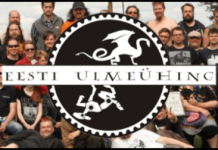
The Estonian Science Fiction Association (Eesti Ulmeühing: https://ulme.ee) anchors the scene, organizing monthly gatherings known as Õhtud eesti ulmega (Evenings with Estonian SF).
Estonia’s secret is simple: it never outsourced its imagination. It kept everything local — the language, the magazines, the awards, the conventions, the authors. It built a fortress of ulme, and inside that fortress, the fandom thrived. Estonia is the only country in Europe where science fiction feels like a national hobby rather than a niche subculture.
Estonia’s literary output is substantial.

The Stalker Awards, voted annually by fans, celebrates both original Estonian works and translations.
Contemporary authors such as Indrek Hargla, Veiko Belials, Manfred Kalmsten, Kristjan Sander, and Maniakkide Tänav publish regularly and maintain a strong national readership.
Estonia’s speculative tradition is deep: events like Hot Springs of Estonian SF (2026) explore roots going back to the 19th century, proving that ulme is not a post‑Soviet invention but a long-standing cultural current.
Estonian science fiction—ulme, the local umbrella term for SF, fantasy, and horror—has evolved into one of Europe’s most surprisingly structured and vibrant small‑language fandoms.
Its roots reach back to 1903, when Matthias Johan Eisen published Tallinn aastal 2000, the first known Estonian SF story.
After World War II, authors such as Boris Kabur and Henn‑Kaarel Hellat shaped the field; Hellat famously coined the word ulme, now central to Estonia’s speculative identity.
In 2015, the fandom celebrated the 45th anniversary of this term.
The real explosion of Estonian SF came with independence in the 1990s and the rise of digital culture.
The horror magazine Mardus appeared in 1991, but the decisive turning point was the creation of the sf2001@obs.ee mailing list in 1996, which rapidly unified fans across the country.
By 1998, Estonia held its first national convention, Estcon, and launched Algernon, an online magazine that became the main gateway for new authors for many years.
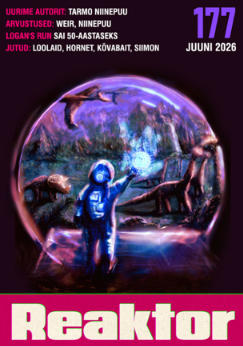
The beating heart of the community is Reaktor (http://ulmeajakiri.ee), a free monthly webzine that has published original fiction, criticism, interviews, and fandom news for years.

Alongside it stands Algernon (http://algernon.ee), founded in 1998 and still one of the most important platforms for new Estonian speculative writers.

ESTCON, the national convention, is unlike any other European con: held outdoors in each July since 1998, at rural venues such as Udu farm holiday complex in the village of Änkküla, Jõgeva County, it feels more like a summer tribe gathering than a hotel‑based conference.
ESTCON: 17-19 JULY 2026
The Estonian National SF Convention is a three-day science fiction convention called Estcon, held in Jõgeva county, on Udu farmstead with 116 members registered.
Stalker Awards voting has ended.
The results will be announced on Saturday, 18th of July 2026 during Estcon and will be made public no later than Sunday evening, the 19th of July 2026.


Estonia also hosts the Haapsalu Horror and Fantasy Film Festival (HÕFF: https://hoff.ee/en/), a major cinematic event each spring. Haapsalu Horror and Fantasy Film Festival (Estonian: Haapsalu õudus- ja fantaasiafilmide festival, abbreviated HÕFF) is an international film festival which takes place annually in Haapsalu, Estonia. HÕFF focuses on horror and fantasy films. HÕFF is organized by the Tallinn Black Nights Film Festival, the Haapsalu Culture Center, and the town of Haapsalu. The first HÕFF took place in 2005, after being created by Marek Reinaas. Since 2012, HÕFF is a member of Méliès International Festivals Federation (MIFF).
Estonia’s literary output is substantial.
The Stalker Awards, voted annually by fans, celebrates both original Estonian works and translations.
The community’s organizational backbone is the Estonian Science Fiction Association (Eesti Ulmeühing), which hosts monthly meetings in Tallinn and Tartu. Attendance is modest—20 to 30 people—but significant given Estonia’s small population. The association also manages Estcon, the Stalker Awards, Pilot (Navigaator) Pirx Film Award and public SF events.

Pilot (Navigaator) Pirx Film Award 2026
The Estonian Science Fiction Association and the Haapsalu Horror Film Festival, in cooperation with the Polish Embassy, will award the Pilot (Navigaator) Pirx award for the best science fiction film starting in 2021, to draw more attention to science fiction.
The 2026 winner was the film “Egghead Republik” by Hugo Lilja and Pella Kågerman (Sweden) .
The film managed to surprise the jury, it was well thought out, multi-layered and completely blinding in a good way.
The jury consisted of Veiko Belials, Jüri Kallas and Kalver Tamm.
It is the improbable miracle of the Baltics — the one that survived.
It begins, as all good Baltic stories do, in the early nineties, when three newly liberated nations looked at the future with the wide‑eyed optimism of people who had just escaped history’s chokehold.
Estonia, Latvia, and Lithuania stepped into independence with the same naïve courage and the same battered typewriters, but only one of them would manage to keep its science‑fiction soul intact.
The others would drift, slowly and tragically, into the warm, sticky embrace of cosplay, LARP, romantasy, and Comic Con culture.
This is the story of two collapses and one survival.
LATVIA: THE QUIET DISAPPEARANCE
Latvia once had a fandom. A real one. With meetings, discussions, Latcon, and the Latvian Society for Science Fiction and Fantasy (LFFB), which today still exists the way abandoned lighthouses exist: structurally present, spiritually vacant, and visited only by seagulls and nostalgic ghosts.
By 2026, Latvian SF fandom has become a polite rumor. The website is still online, like a museum exhibit that nobody dusts.
Latcon hasn’t happened in years. The last generation of active fans has either emigrated, retired, or been swallowed whole by UniCon Latvia, a pop‑culture carnival where the closest thing to science fiction is a Stormtrooper buying bubble tea.
Latvia still has writers — Toms Kreicbergs being the most visible — but they work in isolation, like monks copying manuscripts in a monastery that forgot its own purpose.
The literary SF scene is not dead, but it is certainly not alive. It is Schrödinger’s fandom: both present and absent, depending on who you ask and how nostalgic they are.

LITHUANIA: THE ONE‑DAY WONDER
Lithuania’s fandom story is even stranger.
Dorado, the legendary club founded in 1979, once held the entire Lithuanian SF scene together with the stubbornness of people who believed in speculative fiction more than they believed in electricity. But Dorado faded, dissolved, and eventually evaporated.
What remains today is Lituanicon (info@lituanicon.lt), a one‑day convention in October — a cultural meteor that flashes across the sky once a year and then disappears into the void. It is charming, enthusiastic, and absolutely insufficient to sustain a fandom.
Everything else has been devoured by Comic Con Baltics, a massive pop‑culture beast that feeds on cosplay, gaming, anime, and fantasy YA. Science fiction is tolerated the way a distant relative is tolerated at a wedding: politely, briefly, and only because it would be rude to throw him out.
Lithuania still produces speculative fiction, but the gravitational pull of romantasy and fantasy YA is so strong that hard SF survives only in small pockets, written by authors who refuse to surrender even when the bookstores have already surrendered on their behalf.
ESTONIA: THE LAST STRONGHOLD
And then there is Estonia — the improbable survivor, the Baltic outlier, the country that somehow managed to keep its fandom alive, coherent, and defiantly local.
Estonia has Estcon, now in its 28th edition, an outdoor convention where fans drink beer, argue about space opera, and award the Stalker and Pilot Pirx Awards with the solemnity of a religious ritual.
Estonia has Reaktor, a monthly webzine that publishes fiction, reviews, news, and the occasional existential crisis.
Estonia has Algernon, the venerable online magazine that launched half the country’s writers.
Estonia has Eesti Ulmeühing, the national SF association that organizes meetings in Tallinn and Tartu with the consistency of a Swiss clock.
And Estonia has authors — real authors, active authors, prolific authors.
Estonia is the only Baltic country where SF is not merely written — it is lived.
WHERE ARE THE ESTONIANS?
The question is perfectly legitimate — and, frankly, it’s one that many people across Europe have been asking themselves after EUROCON Metropolcon 2026 in Berlin: where are the Estonians?
Especially when Estonia has the most active SF fandom in the Baltic region, an annual convention (Estcon), two online magazines (Reaktor and Algernon), a functional association (Eesti Ulmeühing), national SF Awards (Stalker and Pilot Pirx), and a tradition spanning more than 40 years.
And yet no Estonian fans in Berlin, no official nominations on ESFS.info, zero European visibility.
Estonia has an active fandom… but one completely turned inward. Estonians have a vibrant fandom, but an entirely local one.
Everything is in Estonian. Everything is for Estonians. Everything is about ulme, not about “European SFF and European fandom.”
They feel no need to connect to Europe SF because they already have: Estcon (their convention, far more personal and “tribal” than Eurocon), Reaktor (a very active monthly magazine), Algernon (a historic magazine), the Stalker Awards (national prizes), monthly meetups in Tallinn and Tartu, a small but extremely tight-knit community.
For them, Eurocon is not a cultural priority.
Estonia has a small but self‑sufficient fandom.
The country has only 1 million Estonian speakers.
The active fandom counts 200–300 people.
ESTCON gathers 100–130 participants.
For them, attending Eurocon is not a tradition. They prefer Estcon, where they feel “at home,” where everyone knows everyone, where they drink beer, talk, run LARPs, give awards, and hang out outdoors.
Eurocon, to them, is too big, too formal, too international, not “ulme” enough, not relevant to their scene.
Estonia has no official structure for ESFS nominations.
This is the key. Although Eesti Ulmeühing exists, there is no official committee to send nominations to ESFS. No one is responsible. No one handles it. No one submits the forms.
In Estonia, fandom runs on spontaneous volunteerism. If no one volunteers to send nominations… then none are sent. That is exactly what happened.
Estonia has a tradition of “non‑participation” in Eurocon.
If you check Eurocon history, you’ll see that:
Estonia almost never sends delegates.
Estonia almost never sends nominations.
Estonia almost never appears in ESFS reports.
This is not an accidental absence.
It’s a tradition. They do not see themselves as part of “Europe SF,” but as part of “Ulme — the Estonian scene.”
Estonia has an SF culture, but a very local one.
Estonians write for Estonians. Publish for Estonians. Award Estonians.
They meet among themselves. They enjoy their small, intense, familiar community. Eurocon offers nothing they are looking for.
Estonia has no international ambitions:
“We do not have very big international ambitions. Most of our efforts go towards the promotion of science fiction and work with the local fandom.”
That says everything.
Estonia lacks the funds for international travel.
A pragmatic but real factor: salaries are lower than in Western Europe, travel costs are high, the fandom is made of ordinary people, not professionals, Estcon is cheap, Eurocon is expensive. For many Estonians, Eurocon is simply not financially justified.
Estonia did not attend Eurocon Berlin 2026 and did not send ESFS nominations because their fandom is local, not European; they have no ESFS ambassador or delegate; they have no interest in Eurocon; no tradition of participation; no resources; no cultural motivation; no official nomination structure.
Estonia has an SF fandom, but one entirely self‑sufficient and inward‑looking.
And Estonia has authors — real authors, active authors, prolific authors.
In 2026, the Baltic SF map looks like this:
ESTONIA (active, prolific, loud): Indrek Hargla, Maniakkide Tänav, Veiko Belials, Heinrich Weinberg, Siim Veskimees, Triinu Meres, Mairi Laurik, Mann Loper, Mart Sander, and a constellation of new voices emerging from Reaktor.
It begins in 1992, in the first fragile summers after the second independence, when the Baltic States—three small nations pressed between sea and history—started rebuilding not only their states, governments and economies, but also their dreams.
And in those dreams, science fiction and fantasy were never marginal curiosities: they were survival engines, cultural laboratories, and secret meeting places for people who wanted to imagine futures radically different from the ones they had just escaped.
Across Estonia, Latvia, and Lithuania, the SFF landscape did not vanish, did not fade, did not retreat into nostalgia.
It grew. It mutated. It hardened.
It became a network of clubs, magazines, conventions, and writers who kept the flame alive even when nobody outside the region seemed to notice.
And today, more than thirty years later, the Baltic fandoms remain fiercely active—vibrant, organized, and defiantly imaginative.
The Estonian Science Fiction Association
Founded on March 25, 1995. Its purposes are the presentation and popularization of SF and the development of Estonian SF. Each summer, the Estonian Science Fiction Association organizes the annual gathering of SF fans, Estcon, where the winners of the Estonian SF award, Stalker, are announced.
Since 1998, the ESFA has once a year given the Stalker awards that recognizes good SF literature published in Estonian in the previous calendar year. The award is given in accordance to the statute and the results of a reader vote.
Once a month, highly informal gatherings take place in Tartu and Tallinn and once a year the Estcon happens – a great summer SF event for everyone.
President of the Society: Veiko Belials
Board members: Kersti Taurus, Joel Jans.
Throughout this article, several images sourced from the public internet have been used for illustrative and informational purposes. The original authors of these photographs were not identifiable, as the images did not display any clear attribution or copyright markings. We fully respect the rights of the creators and acknowledge their copyright. The use of these images falls under fair informational use, with no commercial intent. Should any author wish to request credit or removal, we will promptly comply.

