



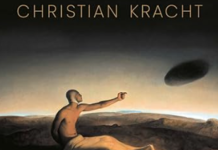





A portal opens from our modern world of data centres and interior design into a medieval fantasy realm, in this playfully surreal tale from the Swiss author Christian Kracht.
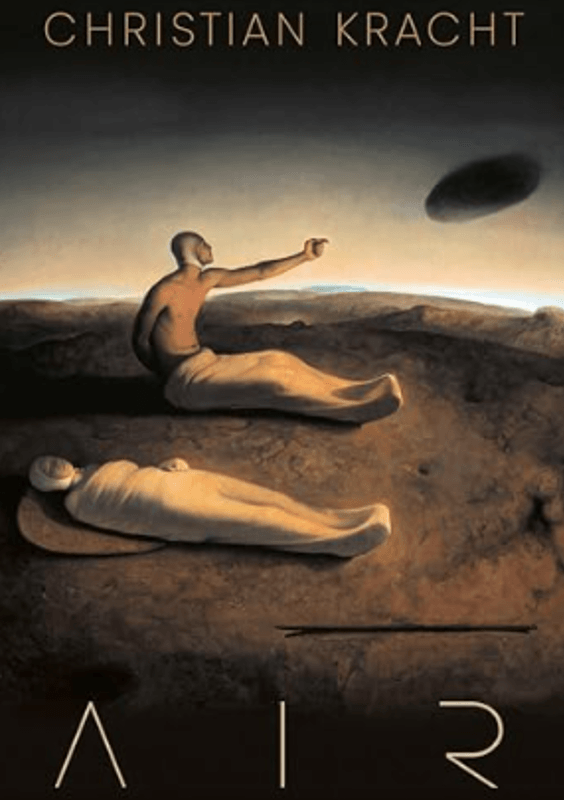
Christian Kracht’s “Air” doesn’t so much unfold as it detonates—quietly, like a power station blowing a fuse somewhere behind your eyelids.
You open the book expecting a satire about interior design and Scandinavian ennui, and suddenly you’re tumbling through a wormhole into a medieval dreamscape where time behaves like a drunk god and consciousness feels like a glitching app.
It’s the kind of novel that makes you wonder whether your own thoughts are being siphoned off into some fjord-adjacent server farm, repackaged, and fed back to you as myth.
Paul, the hermit designer from Orkney, is the sort of man who believes salvation lies in the perfect shade of white—an immaculate, metaphysical white that might disinfect the soul.
He arrives in Stavanger with the zeal of a monk tasked with repainting the universe.
Then the weather snaps, the lights die, and Paul evaporates from the narrative like a ghost who got bored of haunting.
Cohen, the editor who hired him, overdoses not out of despair but out of terminal indifference, as if life itself were a poorly curated mood board he can no longer be bothered to scroll through.
And then—another world.
A medieval realm stitched together from Norse folklore and fever dreams, where a stranger survives an arrow shot by a nine-year-old girl who mistakes him for dinner. They flee through plague towns and wastelands, stumble into an underground city carved from stone, and live among kelp-eating communards who seem to have opted out of reality centuries before opting out was cool. The stranger senses something is off: déjà vu, flattening horizons, the creeping suspicion that he’s a character in someone else’s story. When he fires a modern handgun in a world of dukes and arrows, the rupture feels less like magic and more like a server hiccup.
Kracht binds these two narratives with threads so thin they feel like hallucinations—Merlin and Lancelot in Paul’s home, neopagan whispers, Arthurian echoes, a ceramic pistol manual tucked in a missing man’s bag.
The outage at the data centre becomes a metaphysical event, a cosmic short-circuit that scrambles epochs and identities.
It’s as if consciousness itself has slipped on black ice and fallen through a crack in the timeline.
What makes “Air” so intoxicating is the way its metaphysics are rooted in the banal misery of middle-aged privilege.
Paul dreams of a Hebridean island with feral horses and no electricity, a fantasy of pure subtraction.
Cohen despises Nordic chic and predicts future wars will be fought out of boredom.
Their malaise is so dense it becomes atmospheric, a fog that seeps into the medieval chapters and coats the fantasy with a strange, wistful glow.
The ice sheets, the aurora, the migrating birds—they’re not just scenery but escape hatches, glimpses of a world uncorrupted by data storage and self-loathing.
The novel’s rough edges feel deliberate, like a radio signal drifting in and out of range.
Kracht isn’t offering answers; he’s tuning frequencies.
“Air” reads like a parable about the fragility of consciousness in an age where memory is outsourced to machines and identity is cached in servers vulnerable to storms. If thoughts can persist beyond the body, they can also be scrambled, distorted, or lost.
Madness becomes a software issue.
In the end, “Air” is a warning disguised as a dream, a tale of clever men suffocating in their own cleverness, reaching for transcendence and finding only static.
Christian Kracht takes the modern condition—ennui, privilege, digital dependence—and refracts it through a medieval prism until it becomes something uncanny, shimmering, and strangely beautiful.
It’s a novel that leaves you blinking, unsure whether you’ve just read a satire, a prophecy, or a glitch in your own mind.
And maybe that’s the point.

