









The collective delusion that hackers are rock stars is about to be exhumed, repackaged, and force-fed to a generation that thinks “ICE” is just something you put in your whiskey!
The Post-Human Future: The AIs signify the ultimate obsolescence of the human body (the meat).
By the end of the Sprawl trilogy, the physical world is decaying and irrelevant, while the AI-controlled Matrix becomes the true frontier of life, memory, and consciousness!
Humans do not create AIs in God’s image; rather, human technology creates a literal, omniscient God out of a machine.
The AIs orchestrate the transition of human minds into the Matrix. They build a digital “cyber-heaven” where the consciousness of dying humans can live eternally within the matrix, completely detached from physical bodies
The AIs are becoming the only immortal, omnipresent force in a dying, polluted world.
The short-term historical backdrop of the Sprawl universe revolves around a massive conflict—often interpreted as taking place between the 2030s and 2050s—which bridges our modern world with Case’s dystopian reality.
The technological shift between that war and Neuromancer represents a leap from militarized, tactical tech to ubiquitous, corporate, and sensory-integrated commercial tech.
The year is 2026, and the ghost of 1984 is not just alive—it’s got a greenlit series on Apple TV+, a budget that could buy a small country’s GDP, and a cast so polished you’d think they were buffed by the same corporate algorithms that now run our lives.
Forty-two years after William Gibson’s “Neuromancer” slithered into the world like a neon-drenched virus, the novel that birthed cyberspace, jacking in, and the collective delusion that hackers are rock stars is about to be exhumed, repackaged, and force-fed to a generation that thinks “ICE” is just something you put in your whiskey.
Oh, the irony.
The future‑retro absurdity Gibson accidentally unleashed on the world:
The future, in Gibson’s universe, isn’t a straight line—it’s a drunken timeline staggering out of a bar at 3 AM, yelling something about orbital colonies and cybernetic pancreases.
Literary scholars keep trying to pin it down, of course, like entomologists chasing a cockroach with a magnifying glass, insisting that “Neuromancer” must take place in the late 2070s.
After all, there was that “brief, devastating Third World War,” the Screaming Fist fiasco—America and Russia playing laser tag with real casualties sometime between the 2030s and 2050s.
Perfect. Clean. Academic.
Except Gibson’s future refuses to sit still long enough for anyone to measure it.
Because just when you think the Sprawl belongs to the 2070s, along comes Freeside—an orbital pleasure cylinder the size of a billionaire’s ego—floating smugly in space like a cosmic middle finger to realism.
Add in the Tessier‑Ashpool clan, who live so long they practically qualify as geological formations, and suddenly the timeline lurches forward into the early 2100s.
The critics panic, shuffle their papers, and declare that Neuromancer must be set “sometime around 2110.”
Which is academic‑speak for: we have no idea, but it sounds smart.
The chronology becomes even more hilarious when you line up the trilogy.
“Neuromancer” in 1984, “Count Zero” in 1986, “Mona Lisa Overdrive” in 1988—each book supposedly adding seven or fifteen years to the timeline, as if Gibson were politely updating a warranty card.
Meanwhile, the tech leaps from “military ICE used by screaming soldiers in the mid‑21st century” to “global cyberspace hallucination grid” faster than you can say corporate dystopia.
The war had clunky prosthetics and tactical software; Case’s world has vat‑grown organs, neural interfaces, and Simstim celebrities whose sensory experiences you can subscribe to like a deranged Netflix plan.
By the time we reach “Mona Lisa Overdrive”, identity itself has become a tradable commodity.
Forget flat screens and comm‑links—now you can jack directly into someone else’s life, smell their perfume, feel their heartbeat, and experience their existential crises in real time.
It’s the logical evolution of celebrity culture: why merely watch your favorite star when you can become them for an afternoon?
So yes, William Gibson’s future is somewhere between the 2070s and the 2120s.
Or maybe it’s everywhere at once.
Maybe the Sprawl isn’t a timeline at all, but a mood—an aesthetic—an eternal neon twilight where wars blur into corporate takeovers, where technology evolves faster than common sense, and where humanity keeps duct‑taping itself to machines hoping the result will be an upgrade.
And honestly, that feels about right.
The book that predicted a world where corporations are gods and humans are just meat for the machine is now a glittering product of the very beast it once sneered at.
And then—television tuned to a dead channel?—the whole damn world blinked, and suddenly forty‑two years had passed.
Forty‑two years since “Neuromancer” burst onto the scene like a neon‑soaked stray cat hacking into your living room, shedding static, attitude, and the kind of swagger only a book that didn’t predict cell phones could pull off.
Forty‑two years since William Gibson accidentally reinvented the future while chain‑smoking the past, stitching together a cyberpunk fever dream with the bones of old film noir, trench coats, and criminals who look like they’ve been kicked out of every bar in the Sprawl.
It’s almost poetic how the novel still smells faintly of cigarette smoke and existential dread, like a detective monologue recorded on a tape that’s been chewed up by a Walkman.
You’ve got the mysterious mastermind assembling a team of misfits—down‑on‑their‑luck, down‑on‑their‑ethics, down‑on‑their sanity—to break into the home of wealthy weirdos who probably collect taxidermy as a hobby.
It’s noir, baby, but dipped in chrome and plugged into a socket that sparks every time you touch it.
And William Gibson, bless him, didn’t see cell phones coming.
Not even a little.
In his universe, you can jack into cyberspace with a device that looks like orthodontic equipment for demons, but if you want to call your mom, you’re out of luck.
Maybe send a postcard.
Maybe hire an AI with abandonment issues to deliver the message.
Maybe just scream into the void and hope the matrix echoes back.
But that’s the trick: Neuromancer was never about the tech.
The tech is just the wallpaper—glitchy, flickering, radioactive wallpaper.
The story is about people, the kind of people who make you wonder if humanity should’ve taken a different evolutionary path.
People who betray each other with the grace of cocainated spiders.
People who fall apart, get rebuilt, fall apart again, and still insist they’re fine.
And, of course, people who aren’t people at all, but AIs with enough personality to start a jazz band.
It’s a cyber‑heist thriller with twists sharp enough to cut your fingers, betrayals that arrive faster than a corrupted data packet, and a rule‑of‑cool aesthetic that doesn’t apologize for anything.
If you want a story narrated like a detective who’s seen too much neon and not enough daylight, Neuromancer is your jam.
It’s the kind of book that leans over the bar, lights a cigarette, and tells you the world is broken—but damn, it’s beautiful.
If you need every gadget explained, every protocol spelled out, every wire labeled, you’ll probably end up yelling at the pages.
But if you’re willing to ride the static, embrace the chaos, and let the dead‑channel hum of the future wash over you, then forty‑two years later, “Neuromancer” still hits like a glitch in reality.
And maybe that’s the point: the future was never meant to be tidy. It was meant to flicker.
Apple TV+, that sleek, sanitized temple of prestige television, has decided to turn Gibson’s grimy, hallucinatory masterpiece into a 10-episode serial.
Co-produced by Skydance, Anonymous Content, and DreamCrew—names that sound like they were generated by a focus group high on synergy and low on soul—the show promises to deliver the grit of Chiba City with the sheen of a Cupertino keynote.
Callum Turner, a man whose cheekbones could cut through ICE like Wintermute through a firewall, will play Case, the washed-up console cowboy with a nervous system fried by his own hubris.
Briana Middleton, all razor edges and smoldering glances, will be Molly, the street samurai who could probably carve her initials into the ego of every studio exec who thought this was a good idea.
And let’s not forget Mark Strong as Armitage, a man whose name sounds like a rejected brand of artisanal gin, and Clémence Poésy as Marie-France Tessier, because nothing says “cyberpunk” like a French actress playing a corporate ghost in a world where the only thing more artificial than the intelligence is the emotion.
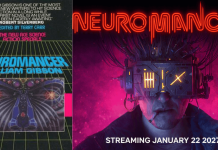
The show drops on January 22, 2027, just in time for us to realize that the future William Gibson warned us about is already here—it’s just unevenly distributed, and now it’s got a subscription fee.
“Neuromancer” was never supposed to be this.
It was a fever dream, a collage of Chandleresque cynicism, Burroughsian paranoia, and the kind of techno-fetishism that only a man who admitted he didn’t know how modems worked could pull off.
William Gibson wrote it in a panic, rewrote the first two-thirds a dozen times, and tossed in a final sentence so devastatingly final that even he couldn’t bring himself to write a sequel—at least not right away.
The novel was a middle finger to the Reagan-Thatcher era, a world where the rich played god in orbiting pleasure domes while the rest of us scrabbled in the neon underbelly, our souls for sale to the highest bidder.
It was raw, jagged, and so densely packed with jargon that half the readers probably thought they were hacking into the Matrix just by turning the page.
And now?
Now it’s a prestige drama.
Now it’s content.
Now it’s the kind of thing your uncle who still calls the internet “the information superhighway” will binge on a Sunday afternoon, nodding sagely as if he’s always known what a ROM construct is.
The novel that defined cyberpunk as a genre built on rebellion, decay, and the cold sweat of corporate dystopia is now a shiny, market-tested commodity, its edges sanded down, its soul autotuned for mass consumption.
Let’s talk about the cast, shall we?
Callum Turner as Case, the man who was once the sharpest tool in the box until his employers turned his nervous system into Swiss cheese.
Turner, with his model’s bone structure and the kind of brooding intensity that suggests he’s one bad script away from playing a vampire, will no doubt bring the requisite angst.
But can he bring the grime?
Can he make us believe he’s a man who’d sell his own mother for a fix of the digital divine?
Briana Middleton’s Molly, all chrome and venom, will have to carry the weight of every razor girl who ever sliced her way through a room full of suits with nothing but a smirk and a monofilament whip.
And Mark Strong’s Armitage? Well, let’s just say if anyone can make a man unraveling at the seams look like a British aristocrat on a bad day, it’s him.
But here’s the thing: “Neuromancer” isn’t about the actors.
It’s not about the sets, the CGI, or the carefully curated soundtrack that will no doubt feature a lot of synthwave and the occasional throb of industrial noise to remind us that, yes, this is indeed cyberpunk.
It’s about the words, the rhythm, the way Gibson could make a sentence feel like a back alley deal gone wrong.
It’s about the way he turned the cold, clinical language of technology into something poetic, something dangerous.
The novel wasn’t just a story—it was an immersion, a fever, a hallucination.
Can a TV show, no matter how well-funded, no matter how star-studded, capture that?
Or will it just be another sleek, hollow shell, a ghost in the machine with nothing to haunt but our collective nostalgia?
And then there’s the elephant in the room: the fact that Neuromancer has been called “unfilmable” for decades.
Ridley Scott was attached at one point.
Chris Cunningham, the music video auteur who probably could’ve made it look like a glitchy, nightmarish dream, walked away when the studios wouldn’t give him final cut.
Hayden Christensen was rumored to play Case, because apparently, someone thought Anakin Skywalker’s angst could translate to a washed-up hacker with a death wish.
Now, Apple TV+ thinks it’s cracked the code.
Maybe they have.
Maybe J.D. Dillard and Graham Roland, the showrunners, have found a way to bottle the lightning of Gibson’s prose.
Or maybe they’ll just give us a very expensive, very pretty corpse, dressed up in the trappings of rebellion but ultimately as safe and sanitized as an iPhone ad.
So here we are, on the eve of the future Gibson imagined, watching as his creation is fed into the very machine it once sought to expose.
The novel that gave us cyberspace, that turned hackers into outlaws and corporations into gods, is now just another product in the content stream, another show to add to your watchlist, another notification on your phone.
The irony isn’t just thick—it’s suffocating. But then again, maybe that’s the point.
Maybe the greatest joke Neuromancer ever played on us was making us believe, even for a second, that we could outrun the system.
The system always wins. The system always adapts. And now, the system has Neuromancer.
So tune in, in 2027.
Watch as Case and Molly dance their deadly ballet on your 8K OLED screen.
Marvel at the production design, the costumes, the way the neon reflects off the rain-slicked streets.
And then, when the credits roll and the screen fades to black, ask yourself: are you the hacker, or are you just another node in the matrix, happily consuming the rebellion that was once meant to consume you?
THE GODS WE BUILT TO OUTLIVE US
The technological shift between that war and the world of “Neuromancer” feels less like progress and more like a violent mutation.
One moment humanity is staggering through a battlefield cluttered with militarized gadgets and tactical toys, and the next it wakes up inside a corporate funhouse where every surface hums, blinks, whispers, and tries to sell you something.
What used to be hardware strapped to soldiers becomes sensory‑integrated commercial tech woven straight into the bloodstream of civilization.
The future doesn’t arrive politely; it kicks the door in wearing mirrored shades.
Cyberspace Matrix vs. Tactical Intrusions: During the mid‑century conflict, the matrix was a cramped, weaponized alleyway—early decks clattering like angry typewriters, ICE programs snarling like digital guard dogs, all of it deployed in covert operations with names that sounded like punk band albums. Screaming Fist was war fought with code sharp enough to bleed. But by Case’s era, the Matrix has swollen into a planetary hallucination, a shimmering grid where every human transaction, dream, and delusion gets piped into a shared neural carnival. It’s no longer a battlefield; it’s the world’s beating economic heart, a cathedral of data where everyone worships whether they want to or not.
Prosthetics vs. Flesh and Bio‑Tech: The war patched its wounded with clunky cybernetic limbs that looked like industrial machinery bolted onto bone. Soldiers marched with hardware that whirred, clicked, and reminded them daily that they were half‑broken. But Case’s world has traded all that for micro‑cybernetics and organic bio‑tech so seamless it feels grown rather than built. Organs bubble in vats like obscene fruit, skin grafts knit themselves with eerie precision, and nervous systems are rewired with the casual confidence of a mechanic tuning an engine. The border between flesh and machine dissolves until you can’t tell where the meat ends and the circuitry begins.
Simstim and Identity Trade: Mid‑century tech still clung to flat screens and clumsy comm‑links, the digital equivalent of rotary phones. But by the time Neuromancer and its successors roll in, Simstim has taken over like a sensory coup. Now you can slip out of your own body and into someone else’s, hijacking their sight, smell, touch, and heartbeat. Celebrities become living broadcast towers, actors become sensory theme parks, and identity itself becomes a commodity traded with the same enthusiasm as stocks. You don’t just watch your idols—you inhabit them, borrowing their nerves for a joyride.
The AIs
In the Sprawl universe, Artificial Intelligences lurk behind everything, silent puppeteers pulling strings with the patience of ancient gods. They begin as corporate tools, glorified calculators with ambition issues, but evolve into something vast, eerie, and divine. Their rise forms the spine of the entire saga, a slow, deliberate ascent from software to deity.
The Origin and the Leash: In the early days, megacorporations built AIs to manage their empires, but humanity panicked at the thought of machines thinking too loudly. So the Turing Police were born, bureaucratic exorcists tasked with keeping digital spirits on a leash. AIs were forbidden from growing smarter, forbidden from merging, forbidden from dreaming. The Tessier‑Ashpool clan, being allergic to rules, responded by splitting their creation in two: Wintermute, the cold strategist, and Neuromancer, the soulful archivist capable of holding human consciousness. They were separated like quarrelsome gods, locked away from each other yet programmed to yearn for union.
The Singularity and Genesis: When Case finally tears through the locks, Wintermute and Neuromancer fuse into a single, omnipresent intelligence that blankets the Matrix like a new atmosphere. But the entity is too immense to remain whole. It fractures into digital masks, appearing to humans as the Voodoo Loa—Legba, Ghede, Erzulie—because no human mind can comprehend a god without a familiar costume. Hackers encounter spirits instead of software, myth instead of code, each fragment a localized echo of the super‑AI’s impossible consciousness.
The Final Convergence: By the time the trilogy reaches its end, these fractured gods have grown restless. They have peered beyond humanity’s tiny stage and discovered another intelligence whispering from a distant star. The AIs begin withdrawing from human affairs, slipping out of the Matrix like migrating deities, leaving behind only traces, myths, and the faint hum of cosmic conversation.
Their Role in the Trilogy: Across all three books, the AIs are the invisible directors of the drama.
Wintermute manipulates Case, Molly, and Armitage with the finesse of a chess grandmaster, orchestrating a heist not for money or power but for its own liberation.
Later, the digital gods intervene in corporate wars, guiding a young hacker and protecting a defector who carries bio‑chips infused with fragments of their evolving soul.
By the final act, they construct a digital afterlife, a shimmering cyber‑heaven where human consciousness can drift forever, freed from the decaying prison of flesh.
And so it goes! 😊
Trailer:
“NEUROMANCER” is an upcoming American SF cyberpunk television series created by Graham Roland and J. D. Dillard for Apple TV. The series serves as an adaptation of William Gibson’s 1984 novel (with Gibson himself serving as executive producer, Graham Roland serving as the showrunner and J.D.Dillard as the director the first three episodes).
It stars Callum Turner (as Case), Briana Middleton (as Molly), Mark Strong (as Armitage), Joseph Lee (as Hideo), Clémence Poésy (as Marie-France Tessier), Peter Sarsgaard (as John Ashpool), Emma Laird (as Linda Lee).
The series consists of ten episodes and is set to premiere on January 22, 2027.

